Weeknotes: 2025-W33
Published: , updated:
Summary
Made decent progress on my texture synthesis project, as well as on a number of smaller bits of tooling.
On the texture synthesis project, I now have a decent ComfyUI workflow pipeline for rendering multiple views of an arbitrary object, regenerating the color texture while maintaining the 3D shape and important visual aspects of the original texture. Consistency is good enough for now, but needs some follow-ups. There’s still a bunch of drudge work to do for all the other viewpoints, but then I’m on to the reprojection part of the project.
Started using Home Assistant to automatically track what I’m watching, replacing the manual method I was using up until now. It can also supplement the data I already have on when I leave and arrive back at home from trips. In theory, this should also now track what I’m playing on Steam and my consoles, but I haven’t felt like playing anything on them lately.
Photos
(Based more on time of processing than time of taking…)



Enjoying
- Reading:
- The Thursday Murder Club (Thursday Murder Club #1) by Richard Osman (★★★★☆)
- Cozy and enjoyable, but maybe a bit too inert.
- The Man Who Died Twice (Thursday Murder Club #2) by Richard Osman
- The Thursday Murder Club (Thursday Murder Club #1) by Richard Osman (★★★★☆)
- Watching (📺🏃🐌📅🎥📽️🏠🔄🏁💑👥★☆):
- 📺🏃 The West Wing seasons 1 to 3
- 📺🐌💑 Eyes of Wakanda season 1
- Playing:
Highlights
Here’s what I learned about building agent systems from studying what works in the wild and testing it myself.
[…]
Primary Agents handle the conversation. They understand context, break down tasks, and talk to users. Think of them as project managers who never write code.
Subagents do one thing well. They get a task, complete it, return results. No memory. No context. Just pure function execution.
I tried three-tier systems, four-tier systems, agents talking to agents talking to agents. It all breaks down. Two tiers works best.
[…]
Every subagent call should be like calling a pure function with the same input producing the same output, no shared memory, no conversation history, no state.
[…]
How much context should subagents get? Less than you think.
Level 1: Complete Isolation: Subagent gets only the specific task. Use this 80% of the time.
Level 2: Filtered Context: Subagent gets curated relevant background. Use when task needs some history.
Level 3: Windowed Context: Subagent gets last N messages. Use sparingly, usually breaks things.
– “Best Practices for Building Agentic AI Systems: What Actually Works in Production” by Shayan Taslim
This matches my limited experience working with Claude Code. Context is super important - you don’t want the context of your “main agent” that has more global understanding to get polluted by the path taken to build component pieces, and it’s often better to have those components built with some isolation from the larger problem.
Like many, I’ve settled into a sort of “project manager”/coordinator agent that keeps track of what needs doing and dispatches work, a “researcher”-type agent that discovers information, a “product manager”-type agent that breaks down work into bit-sized chunks, and “engineer”-type agents that implement the work.
Recommended
I Tried Ray-Tracing Glass and Rainbows - Sebastian Lague
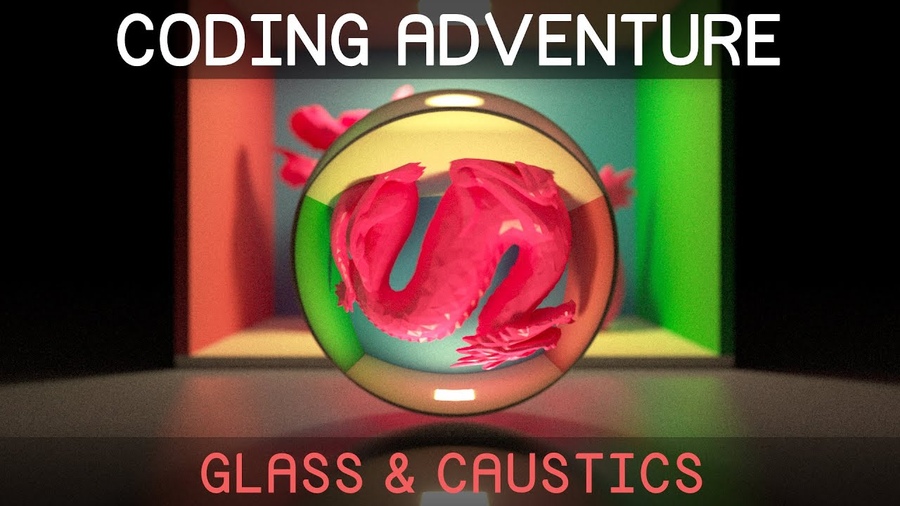
Sebastian continues to impress and inspire.
The Penrose Steps - Cracking The Cryptic
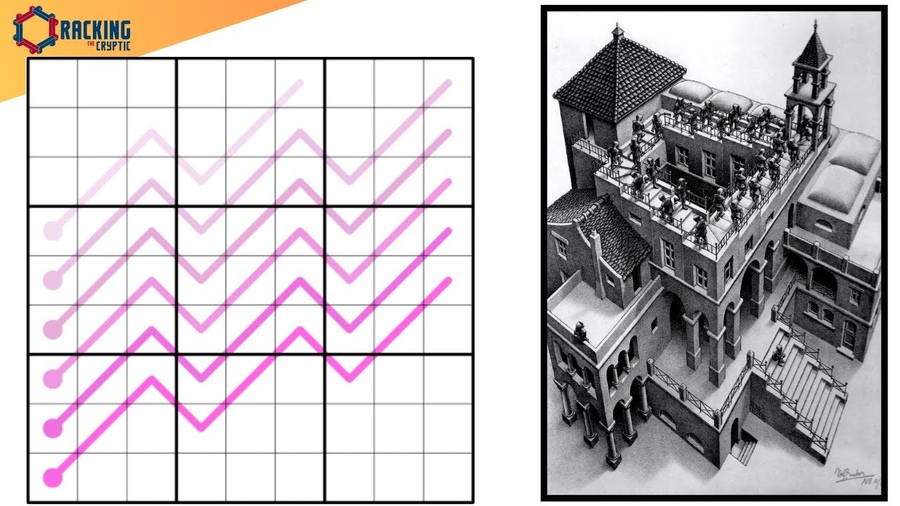
A simple new mechanic and well-designed geometry makes this a fun puzzle.
Claude Code Debugs with LLDB in TMUX - Armin Ronacher
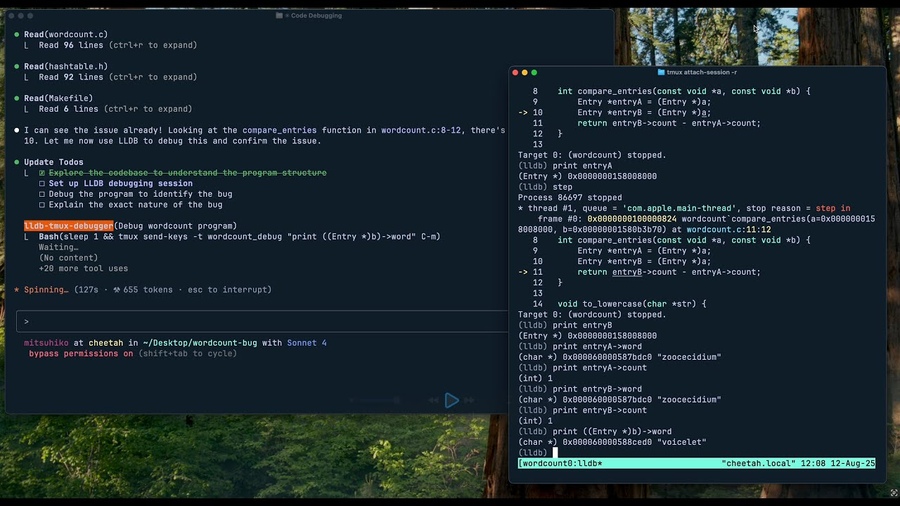
I’ve been using tmux for inter-agent communication in my experiments, but hadn’t yet thought of using it for running certain types of interactive programs in it. Actually, I guess I used it for an experiment I made for a conference program navigator - I just hadn’t thought of using it for something other than what I was building…